

Regain Your Sound Clarity: Otosclerosis (Middle Ear Calcification) Surgery
Don't let your progressively declining hearing, the buzzing in your ears, and the difficulty you experience understanding your loved ones create a wall between you and life. With this elegant, minimally invasive surgery, where the immobilized middle ear ossicles are replaced with a microscopic prosthesis, you can instantly regain the former clarity and sharpness of sounds. You are not condemned to silence.
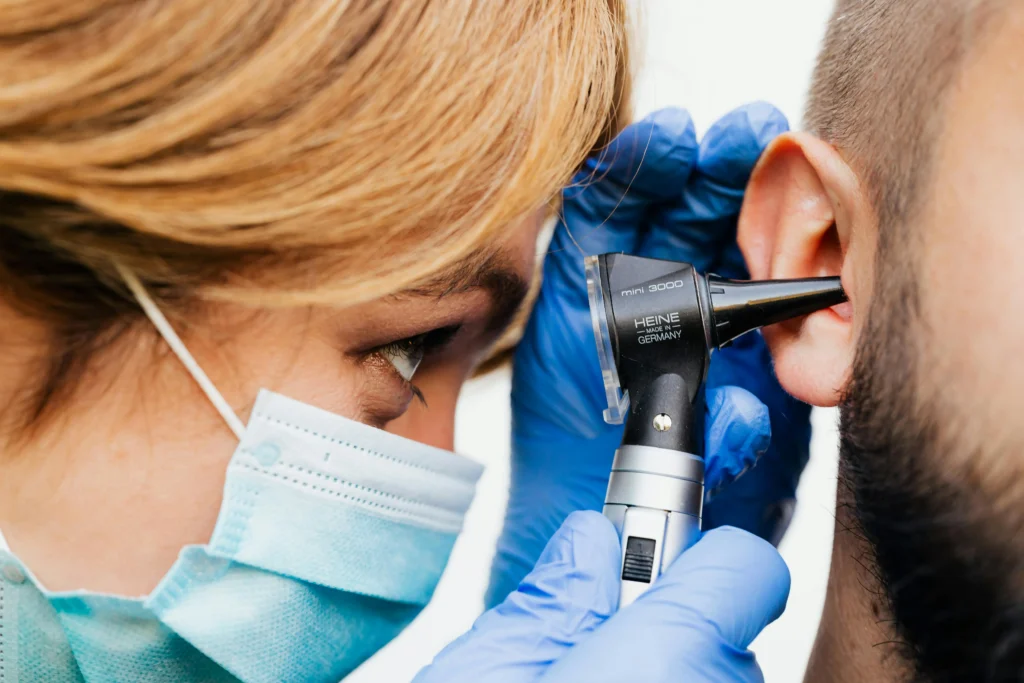
What is Otosclerosis (Osteoarthritis) and How Does it Impair Hearing?
The stapes bone, one of the smallest but most important parts of our hearing system, must constantly vibrate to transmit sound waves to the inner ear. In otosclerosis, an abnormal calcification (hardening) occurs at the base of this bone, usually due to genetic or hormonal reasons. The calcified bone becomes immobile and essentially locked in place. Unable to vibrate, the stapes bone cannot transmit sound to the inner ear, and a gradual hearing loss begins. Otosclerosis surgery (stapedotomy) is the process of removing this locked bone under a microscope using lasers or special instruments and replacing it with a millimeter-sized "Teflon or titanium prosthesis" (piston) that perfectly transmits sound. This re-establishes the sound transmission chain.
- Especially those who experience hearing loss that begins in their 20s and 30s and progresses slowly over the years.
- Those with a family history (genetic) of early-onset hearing loss or ear calcification
- Those who experience hearing loss along with persistent ringing (tinnitus) and buzzing in the ears.
- Those who understand others better in noisy environments (buses, restaurants, etc.) than in quiet environments (Paracusis Willisii)
- Women who notice a sudden acceleration or worsening of hearing loss during pregnancy
A miraculous awakening, achieved with a precision of one-tenth of a millimeter.
Otoskleroz cerrahisi, KBB alanının teknik olarak en zarif, hata affetmeyen ve üst düzey mikroskobik el becerisi gerektiren ameliyatlarının başında gelir. Çünkü insan vücudunun en küçük kemiği olan üzengi kemiği ve iç kulağın hassas sıvılarıyla çalışıyoruz. Dr. Nurten Küçük olarak bu ameliyattaki felsefem; iç kulağa asla zarar vermeden kilitlenmiş o kemikçiği mikrocerrahiyle aşmak ve yerine vücutla %100 uyumlu o minik pistonu yerleştirmektir. Hastamın ameliyat masasında, protez takıldığı an fısıltıları bile duymaya başladığı o ‘mucizevi uyanış’ anı ve yüzündeki gülümseme, mesleğimizin en paha biçilemez ödülüdür.
Scarless and Microscopic Surgery
The procedure is performed entirely through the ear canal (closed method) without any external incisions. Advanced surgical microscopes or high-resolution endoscopes are used to work within a millimeter-sized area.
Lifelong and Safe Prostheses
The millimeter-sized prosthesis (piston) that replaces the locked bone is made of Teflon or titanium. It is completely biocompatible; it does not rust, decay, trigger airport detectors, or prevent you from entering MRI (Magnetic Resonance Imaging) machines.
Fast Results and Discharge
You will generally be kept under observation in the hospital for one night after the surgery. After the special dissolvable sponges inside the ear are removed (usually within 1-2 weeks), you will clearly experience that tremendous and lasting improvement in hearing.
Frequently Asked Questions
Will I definitely hear after the surgery, and what is the success rate?
Otoskleroz cerrahisi (Stapedotomi), KBB ameliyatları içinde yüz güldürücü ve başarı oranı en yüksek (%90-95) operasyonlardan biridir. Deneyimli ellerde protez doğru yerleştirildiğinde, iletim tipi işitme kaybı tamamen ortadan kalkar ve hastanın duyması kendi doğal ve sağlıklı seviyesine geri döner.
Is dizziness or loss of balance possible after surgery?
Because the ossicles are removed in direct contact with the inner ear fluids, it is completely normal and expected to experience mild dizziness (vertigo) or lightheadedness for the first few days after surgery. This is quickly controlled with medication given in the hospital and completely disappears within a few days as the brain adapts to the new situation.
If I use a hearing aid, will I still need surgery?
Hearing aids offer temporary hearing comfort by amplifying sound, but they do not treat or stop calcification in the middle ear. Surgery, on the other hand, solves the underlying mechanical problem, restoring natural hearing. For elderly patients who do not want surgery or cannot undergo general anesthesia, hearing aids are a very good alternative.
Will the disease spread to my other ear?
Otosclerosis is a genetic disease that generally tends to affect both ears (bilateral). However, the rate of calcification in each ear may differ. If both ears have calcification severe enough to require surgery, the ear with weaker hearing is operated on first; after waiting at least 6 months to 1 year, surgery on the other ear can be safely planned.
Take the first step towards an accurate diagnosis and personalized treatment.
For an initial consultation, examination, and personalized treatment plan, please contact us immediately.