


Don't Surrender to Silence, Race Against Time: Treatment for Sudden Hearing Loss
Have you ever woken up in the morning or suddenly noticed that your hearing completely blocked your ears, preventing you from hearing the other person on the phone? This isn't just earwax; it could be a "hearing infarction" requiring immediate intervention. Don't miss the first 72-hour golden window; protect your hearing nerves from permanent damage with intensive medical and cellular rescue treatments at our clinic, and quickly return to the world of sound.
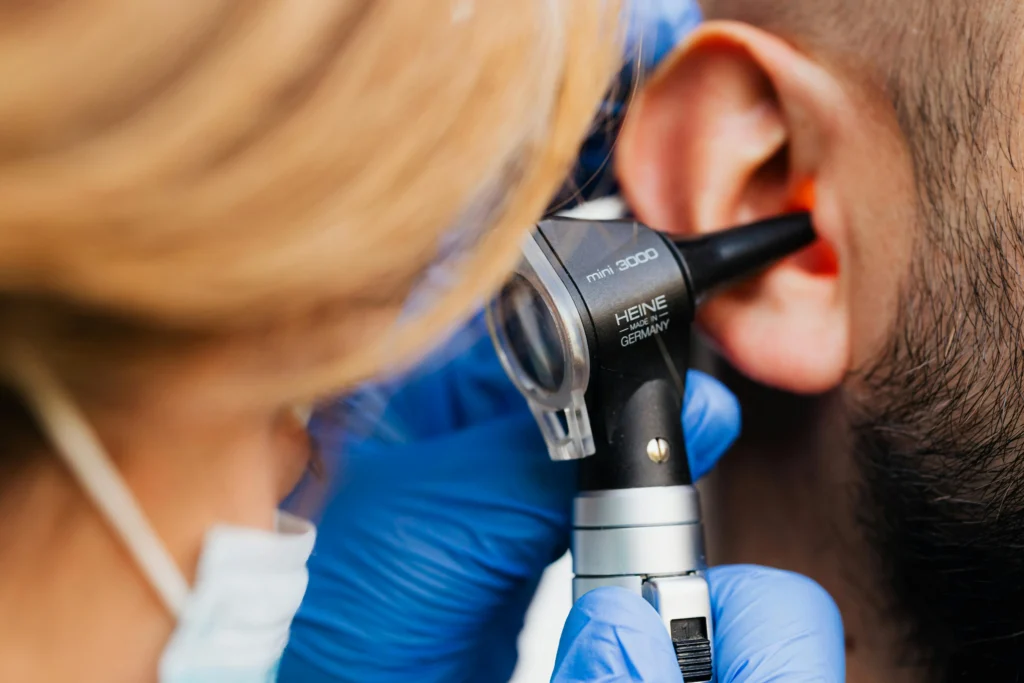
What is Sudden Hearing Loss (Hearing Infarction) and Why is it an Emergency?
Sudden hearing loss is defined as a hearing loss of 30 decibels or more in at least three consecutive sound frequencies within a period of less than three days. Just as a heart attack can occur when blood vessels supplying the heart become blocked, hearing cells in the inner ear die from lack of oxygen due to blockages in the capillaries supplying the ear, caused by clots, viral infections, or intense stress. These cells can only withstand oxygen deprivation for a very short time. Many patients wait for days, thinking "water got in my ear" or "dirt is blocking it." However, every hour lost causes irreversible death of nerve cells. At our clinic, we consider this a top priority "emergency case" and race against time to restore hearing.
- Those who experience complete deafness/blockage in one ear upon waking in the morning or suddenly
- Those who experience a severe buzzing, ringing in the ears (tinnitus), or dizziness along with hearing loss.
- Those who have recently had a severe case of influenza, COVID-19, or a viral infection
- Adults who work under high stress and have problems with high blood pressure or atherosclerosis.
- "Instead of waiting and saying "It will open up on its own in a few days," informed patients seek immediate solutions.
We only have 72 hours to save hearing cells.
As an ENT physician, the cases that sadden me most are patients who suddenly lose their hearing and come to the clinic 15-20 days later hoping it will "pass." Unfortunately, at that stage, the inner ear cells have lost their vitality. At Dr. Nurten Küçük, my approach to treating sudden hearing loss is extremely aggressive and rapid. The moment my patient walks through the door, as soon as I perform an audiological (hearing) test, I give that area a "kiss of life" with high-dose systemic cortisone, micro-injections into the eardrum, and supportive treatments that accelerate blood flow. The moment my patients regain their hearing through early intervention is one of the greatest miracles of our profession.
Emergency Audiological Diagnosis
To determine whether the hearing loss is due to earwax (conductive) or nerve damage (sensorineural), pure tone audiometry (hearing test) is performed within minutes and the degree of damage is mapped.
High-Dose Cortisone Therapy
The gold standard treatment is cortisone. To resolve inner ear edema within seconds, oral or intravenous cortisone is initiated depending on the patient's condition, and often cortisone is injected directly into the middle ear (intratympanic) through the eardrum.
Hyperbaric Oxygen and Support
To revive inner ear cells suffocated by lack of oxygen, patients are referred for Hyperbaric Oxygen Therapy (breathing pure oxygen in a chamber) and blood thinners/vitamin supplements in addition to cortisone treatment.
Frequently Asked Questions
My ear feels blocked; how can I tell if it's just earwax buildup or sudden hearing loss?
It's impossible to distinguish between the two by simply looking at it or feeling it yourself. Both give the same feeling of "blockage and muffled hearing." If you experience a sudden blockage in your ear, never poke it with a cotton swab or wait. See an ENT specialist immediately; a 10-minute hearing test can provide a vital diagnosis right away.
What is the latest time I have to start treatment?
Tıbbi otoriteler ilk 72 saati “altın pencere” olarak kabul eder. İlk 3 gün içinde başlanan tedavilerde başarı ve işitmenin tamamen geri dönme oranı %80’lerin üzerindedir. İlk 1 haftada başarı oranı düşmeye başlar. 2. ila 4. haftadan sonra yapılan müdahalelerde ise maalesef kalıcı işitme kaybı ihtimali çok yüksektir.
Does it hurt to have cortisone injected into the eardrum with a needle (intratympanic injection)?
Hayır, acılı bir işlem değildir. Kulak zarı önce özel damla veya spreylerle tamamen uyuşturulur. Ardından saç teli inceliğinde bir iğneyle kortizon doğrudan kulağın içine verilir. Bu sayede ilacın tüm vücuda (sistemik) yayılıp yan etki yapması engellenir, kortizon %100 oranında sadece hasarlı olan iç kulağa etki eder.
Ani işitme kaybı yaşarsam işitmem %100 geri gelir mi?
Bu durum; hastanın yaşına, tedaviye kaçıncı günde başlandığına, işitme kaybının şiddetine (hafif mi, tam sağırlık mı) ve eşlik eden şiddetli baş dönmesi (vertigo) olup olmadığına göre değişir. Genç yaşta ve ilk gün başvuran hastalarda genellikle tam (%100) iyileşme görülürken, gecikmiş vakalarda kısmi iyileşme sağlanabilmektedir.
Take the first step towards an accurate diagnosis and personalized treatment.
For an initial consultation, examination, and personalized treatment plan, please contact us immediately.