


Say Goodbye to Endless Infections and Hearing Loss: Ear Tube Surgery
Does your child frequently suffer from middle ear infections, turn up the TV volume too high, or lag behind their peers in speech development? End months of antibiotic cycles and stubborn fluid buildup in the middle ear with a comfortable 15-minute procedure. Using millimeter-sized tubes inserted into the eardrum, we instantly restore your child's hearing and protect them from recurring febrile infections.
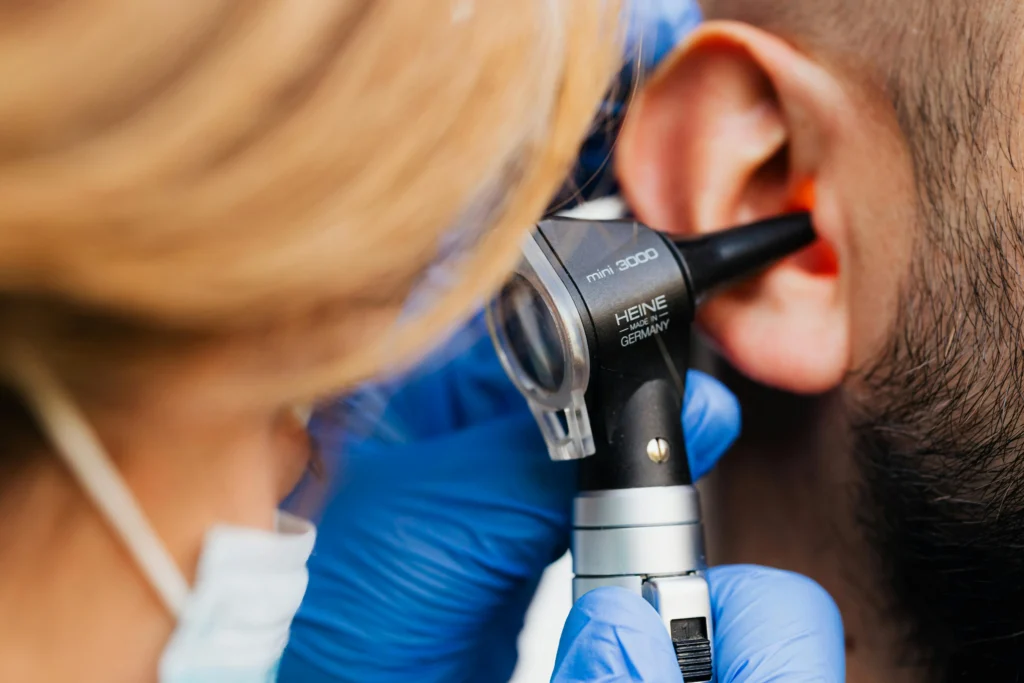
What are ear tubes and why are they inserted?
The Eustachian tube, which connects the nasopharynx (the area behind the nose) to the middle ear, allows the ear to ventilate and fluids to drain into the nasopharynx. In children, this tube can become blocked due to adenoid enlargement, frequent upper respiratory infections, or allergies. A sticky fluid (effusion) begins to accumulate in the middle ear, deprived of air. This fluid prevents the eardrum from vibrating, leading to significant hearing loss and recurrent painful infections. An ear tube (ventilation tube) is a microscopic, "roller-shaped" ventilation channel inserted into the eardrum to break this vacuum effect, clear the sticky fluid, and allow the middle ear to receive air from the outside.
- Those with middle ear fluid accumulation (Otitis effusion) that does not respond to drug treatment (longer than 3 months)
- Children who experience severe and febrile middle ear infections very frequently (e.g., 5-6 times) within a year.
- Those experiencing speech delay, attention deficit in school, and learning difficulties due to hearing loss.
- Those who are at risk of eardrum retraction and adhesion due to negative pressure.
- Adults whose Eustachian tube is blocked and whose ear does not open after air travel or diving.
Protecting hearing means protecting a child's future and development.
Many parents who come to my clinic spend months with their children on antibiotics out of fear of surgery, and unfortunately, they witness their children experiencing partial deafness during the most critical learning/speech development period. My approach as Dr. Nurten Küçük is to avoid unnecessary surgery, but to intervene quickly when medical treatment is exhausted, before permanent damage to the eardrum occurs and the child's mental development is disrupted. This delicate and split-second procedure, performed under a microscope, not only dries the ear but also puts a definitive end to those endless sleepless, feverish, and painful nights for parents.
15 Minutes of Comfort
The procedure is performed in an outpatient setting with very mild and short-term mask anesthesia (without intubation) in children, and with only ear anesthesia in adults. The total procedure time does not exceed 10-15 minutes.
Immediate Hearing Improvement
The sticky fluid that accumulates behind the membrane is removed by vacuuming, and as soon as the tube is inserted, the pressure on the membrane is relieved. The patient begins to hear sounds clearly and distinctly again from the moment they wake up from anesthesia.
Spontaneously Falling Tubes
The inserted tubes are usually gradually pushed towards the outer ear canal and fall out on their own within 6 to 12 months as the eardrum regenerates. No second surgery or anesthesia is needed for removal.
Frequently Asked Questions
Can my child bathe or swim in a pool while having an IV drip inserted?
Yes, it can be inserted, but great care must be taken. There is a microscopic hole in the middle of the tube that allows air to pass through. Soapy solutions (bath/shampoo) or pool water can seep into the middle ear through this hole and cause infection. Therefore, while the tube is in the ear, it is essential to use special earplugs recommended by your doctor when bathing or swimming in the sea, and to avoid submerging your head in water.
Can it be done at the same time as adenoidectomy?
Absolutely, and they are often done together. If the primary cause of middle ear fluid in a child is a large adenoid obstructing the Eustachian tube, the adenoid is removed in the same procedure (with a single anesthesia) while the tube is being inserted, completely eliminating the source of the problem and minimizing the risk of fluid recurrence after the tube falls out.
Will the membrane remain open (or have a hole) after the tube falls out?
Tüpler, kulak zarının kendini yenileme mekanizmasıyla dışarı atılır. Yani tüp dışarı doğru itilirken, zar da arkasından kendi kendini onararak (kapatarak) ilerler. Tüp düştüğünde kulak zarı %98-99 oranında tamamen sağlam ve kapalı haldedir. Kalıcı delik kalma ihtimali çok nadirdir.
Will my child's speech improve quickly?
In children who omit certain letters (especially consonants like s, ş, and f) or experience delayed speech due to hearing loss, a rapid and incredible leap in vocabulary and pronunciation occurs immediately after surgery as hearing normalizes.
Take the first step towards an accurate diagnosis and personalized treatment.
For an initial consultation, examination, and personalized treatment plan, please contact us immediately.